Casinos
 Betting
 Games
Games 
 Payments
  Casino Bonus

BC Gaming Control Act April 2026: What the New IGCO Means for Players and Operators

- BC Gaming Control Act April 2026: What the New IGCO Means for Players and Operators

 Author: Lukas Mollberg
 Updated: 1 June, 2026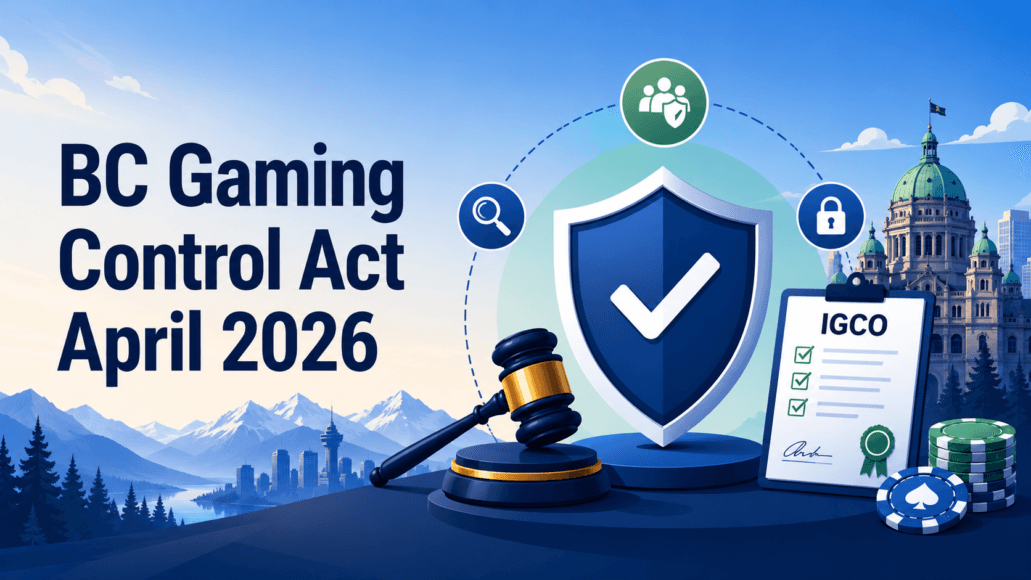
On April 13, 2026, British Columbia's gambling landscape changed in a way that had been years in the making. The province's updated Gaming Control Act — passed in 2022 but held until its supporting regulations were finalized — came into full force. It brought a restructured regulatory authority, revised licensing categories, and a sharper focus on combating financial crime in casinos and online gaming environments. This was not a minor policy adjustment. It represents the most significant overhaul of gaming regulation in BC in decades, touching everything from how casinos are licensed to how players interact with digital platforms.
Two independent reviews laid the groundwork for this moment. The German Report in 2018 and the Cullen Commission in 2022 together documented systemic vulnerabilities in BC's regulatory framework and called for a fundamentally different approach to oversight. Both reviews found that money laundering had flourished inside BC casinos for years. The previous regulator — the Gaming Policy and Enforcement Branch (GPEB) — lacked the independence and enforcement authority needed to act decisively. The new law closes those gaps directly.
We at Casinoble track regulatory shifts across Canadian provinces because they shape which platforms are genuinely safe and which carry hidden risk. The April 2026 changes in BC matter not just to industry insiders, but to anyone using Canadian online casino platforms to play. Understanding what changed — and why it matters — helps players make better-informed decisions in a market that is actively being reformed.
What Is the Independent Gambling Control Office
The IGCO is BC's new independent gaming regulator. It replaced GPEB on April 13, 2026, under the new Gaming Control Act, S.B.C. 2022, c. 29. The province created it in direct response to the weaknesses the German Report and the Cullen Commission identified. The distinction between “independent” and “branch” matters more than it might initially appear. GPEB sat inside the Ministry of Public Safety and Solicitor General, which meant regulatory decisions were ultimately subject to ministerial oversight. The IGCO operates separately from government. A General Manager now holds the authority to make and enforce rules without waiting for cabinet approval.
One central goal of the new framework is to cleanly separate two functions that were previously blurred. The BCLC conducts and manages commercial gambling in the province — it operates the games. The IGCO regulates the industry, overseeing compliance, enforcement, registration, and integrity. The IGCO can now issue directives to the BCLC without requiring ministerial consent. This separation matters structurally. Under the prior model, the regulator and the operator were both accountable to the same ministry. A genuinely independent overseer changes that accountability dynamic entirely.
The IGCO also continues to administer the Gambling Support BC program, which delivers outreach and treatment services to anyone harmed by gambling. The inclusion of problem gambling support within the regulator's mandate signals an intent to treat player protection as a core function — not an afterthought. For players already exploring the safest online casino options, this shift in institutional priorities is worth noting.
The Anti-Money Laundering Mandate
Anti-money laundering has moved from an operational concern to a statutory responsibility. The new Act makes AML prevention a core legal duty of the regulator. The IGCO now holds broad powers to detect and investigate unlawful activity. In practice, it can initiate investigations, demand records, and compel cooperation from casino operators and gaming service providers — without routing those requests through a ministry first.
The context behind this matters. The Cullen Commission identified BC casinos as having been used to launder hundreds of millions of dollars, much of it linked to organized crime networks that exploited the large-cash culture of some gaming floors. The previous framework had no shortage of rules on paper. Enforcement, however, was fragmented. The regulator lacked the structural independence to act against politically sensitive interests. The new law changes what the regulator must do — not just what it is permitted to do.
What Stronger Enforcement Means for Players
From a player's perspective, stronger AML enforcement is not an abstract benefit. Casinos operating under meaningful oversight are less likely to facilitate fraud or misuse player data. Tighter compliance environments also push operators toward faster, more transparent internal processes. If you compare casinos with fast withdrawal processing, the regulatory environment of a platform directly affects whether its processes meet a genuine standard or simply check a box.
Changes to Supplier Registration and Licensing
One of the more technical but consequential parts of the April 2026 update involves how the province classifies and registers gaming suppliers and service providers. The new framework introduces a revised registration class structure and an updated fee schedule. It also expressly excludes the production of games for use in online gaming schemes from the definition of “gaming services.” This means upstream game producers and aggregators that do not distribute directly to the BCLC no longer need IGCO registration.
The new supplier classes under the Gaming Control Regulation break providers into distinct categories based on what they do and at what revenue scale. Online suppliers distributing content to the BCLC now fall into tiers from Class C through E, based on projected gross annual revenue. Other categories cover electronic gaming device manufacturers, software providers handling fairness and AML systems, and charitable gaming event providers. The old flat registration system treated a small lottery retailer the same as a major online platform provider. That made neither operational nor financial sense. The tiered model reflects how the industry has actually evolved.
For players who use live casino game platforms or online slots sites, the studios behind those games now operate within a clearer compliance classification. That transparency in the supply chain is part of what separates a well-regulated market from one where accountability stops at the casino brand and goes no further.
| Class | Description |
|---|---|
| A Supplier | Producers or distributors of electronic gaming devices |
| B Supplier | Producers or distributors of non-electronic gaming supplies |
| C Supplier | Online gaming distributors to BCLC, $5M+ gross annual revenue |
| D Supplier | Online gaming distributors to BCLC, $1M–$4.9M gross annual revenue |
| E Supplier | Online gaming distributors to BCLC, under $1M gross annual revenue |
| F Supplier | Distributors of fairness, security, or AML software and hardware |
| A Service Provider | Safety, security, or fairness service providers |
| B Service Provider | Janitorial or leasing services at gaming facilities |
| Gaming Facility Operator | Operators of provincial gaming facilities |
| Gaming Event Service Provider | Service providers to gaming event licensees |
| Gaming / Lottery Retailer | Lottery ticket sellers outside gaming facilities |
Updated Fees and What They Signal
Registration and licensing fees across the gambling industry have increased for the first time in more than fifteen years. The province has also introduced new revenue-based fees for gaming facilities. Fee levels in regulatory frameworks often read as bureaucratic detail, but they carry a broader signal. When fees go unchanged for fifteen years, the regulator's ability to fund proper investigations, technology upgrades, and compliance monitoring quietly erodes. A regulator that cannot fund itself adequately cannot enforce effectively.
Gaming facility fees have shifted from a flat per-slot-machine rate to a revenue-based model. Larger facilities now carry a proportionally greater share of regulatory costs. Charitable gaming event fees have moved to a sliding revenue-based scale in the same way. This proportional approach makes more sense financially and administratively. It ties regulatory burden to actual size and revenue rather than applying the same charge to a small charity bingo as to a major Vancouver casino. It also creates a more sustainable long-term funding base for the IGCO as it builds its compliance infrastructure.
For operators, this is a cost increase. Whether those costs translate into reduced bonus offers or tighter promotional structures is a reasonable question. Players watching no deposit casino bonuses or ongoing casino bonus offers should monitor whether the licensed BC market adjusts its promotional activity in the months following the transition.
What This Means for Online Gambling in BC
BC's gaming regulation has traditionally focused on land-based casinos and the BCLC's PlayNow platform. The updated Act extends the framework more explicitly to online environments. The regulated online market in BC still operates primarily through BCLC's licensed platform. Players who choose offshore or grey-market online casinos operate entirely outside this framework and receive none of the protections the IGCO provides.
Key Changes Affecting the Online Space
The April 2026 update introduces several changes that apply specifically to online gambling in BC. These are worth understanding before choosing where to play:
- The IGCO holds authority over BCLC's online platform, not just its physical casinos.
- AML requirements now apply to online gaming schemes, not just casino floors.
- Player protection programs are embedded in the regulator's mandate, not treated as optional additions.
- Supplier classification now explicitly accounts for online game distribution chains.
The distinction between licensed and unlicensed platforms matters for anyone evaluating where to play. A casino operating within a regulated framework — where the regulator can issue directives, investigate complaints, and enforce compliance standards — offers a structurally different level of accountability than one operating under a lighter offshore licence. Players comparing new online casino platforms should treat regulatory independence at the oversight level as one of the more reliable signals to look for.
The Operator-Regulator Separation and What Comes Next
BC's model now draws a hard line between the operator function and the regulatory function. The BCLC runs the games. The IGCO sets and enforces the rules. The Cullen Commission specifically called for this separation because the previous blending of roles created conflicts of interest that weakened enforcement. Whether similar structural reforms spread to other provinces depends partly on how effectively the IGCO operates in its early period. Alberta's emerging iGaming framework is already drawing comparisons, and other provinces are watching BC's transition closely.
For players comparing payment options on licensed platforms, it is also worth noting that compliance environments tend to influence which payment methods operators support and how quickly they process funds. Players researching Interac casino payment options will find that operators in tightly regulated markets tend to support faster, more traceable payment methods as part of their compliance posture.
Who the Changes Affect Most
Not every player or operator feels these changes equally. The impact breaks down differently depending on how someone interacts with BC's gaming market:
- Land-based casino operators now face revenue-based fees and more direct IGCO oversight without ministerial buffer.
- Online game suppliers distributing to BCLC must register under the new tiered class structure based on annual revenue.
- Upstream game producers not distributing directly to BCLC may no longer need IGCO registration at all.
- Players on licensed BC platforms gain the protection of a regulator with genuine independence and statutory AML duties.
For players focused on getting the most value from casino platforms, changes in the compliance environment can also affect bonus structures. Operators adjusting to higher registration costs may recalibrate promotional budgets. Keeping an eye on free spins bonus offers over the coming months will give a practical sense of whether the market absorbs these costs quietly or passes them along.
Conclusion
The April 2026 changes to BC's Gaming Control Act are substantive. They restructure who regulates gambling, how suppliers are classified, how fees are calculated, and what powers the regulator holds in relation to both operators and the BCLC itself. At the core of all these changes sits the same problem two independent commissions identified: BC's gambling market had grown significantly in complexity and scale, while its regulatory framework remained shaped by an earlier era. The creation of the IGCO is an attempt to build a regulator that matches the current environment rather than the one that existed fifteen years ago.
For players, the implications are practical. A stronger, more independent regulator means platforms operating in the licensed BC market face genuine compliance expectations — and that players on those platforms carry real protections. Casinoble will continue monitoring how the IGCO develops its enforcement posture in the months ahead, particularly as it moves from transition to active regulation, and we will update our coverage on the latest Canadian gambling news page accordingly.

Lukas Mollberg
Casino Expert | Head of Content at CasinobleLukas Mollberg is an experienced iGaming analyst and editorial lead with more than twenty years in gaming and digital media, including over eight years focused on online casinos. As Head of Content at Casinoble, he guides the editorial team, shapes review methodology, and ensures that research and analysis are grounded in verified data and clear evaluation standards.
Most Recent News
Get the latest information