Casinos
 Betting
 Games
Games 
 Payments
  Casino Bonus

Exit Trigger Effect: How Cashout Speed Shapes Player Behavior

- Exit Trigger Effect: How Cashout Speed Shapes Player Behavior
 Author: Lukas Mollberg
 Updated: 10 April, 2026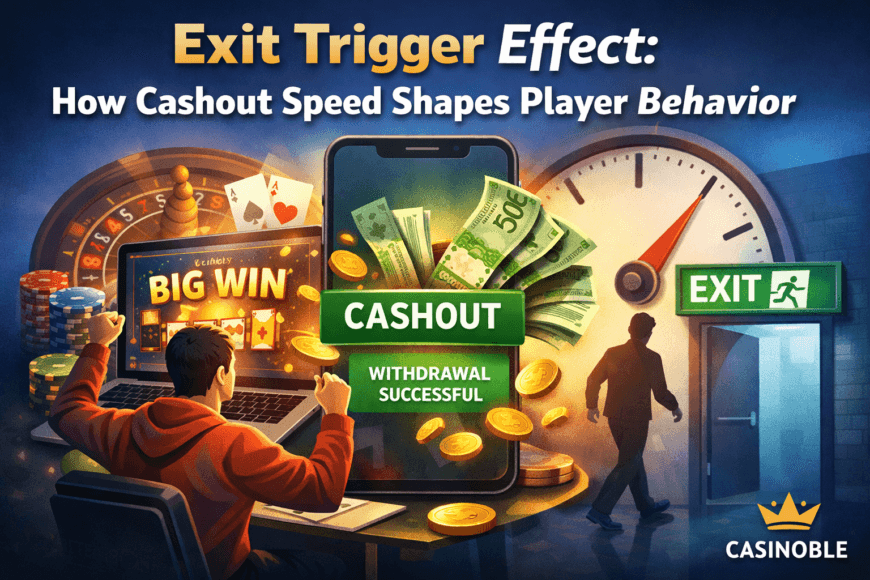
The way players end their sessions is rarely random. In our experience, one of the strongest behavioral patterns among Canadian players is what we call the “exit trigger” effect — the moment when a player decides to stop playing, often immediately after a withdrawal becomes available or is completed.
This effect is closely tied to psychology. Players don’t just gamble for entertainment; they also look for a sense of closure. When a withdrawal feels fast, smooth, and reliable, it creates a natural stopping point. On the other hand, when payouts are delayed or unclear, sessions tend to extend longer than planned.
Based on what we’ve seen across multiple operators, players often treat a successful withdrawal as the “end of the story” for that session. This differs from slower withdrawal processes, where uncertainty can keep players engaged longer, sometimes without realizing it.
This is why cashout speed is not just a technical feature. It directly shapes player behavior, session length, and overall risk exposure.
Why Cashout Speed Matters More Than Players Realize
Most players focus on bonuses or game variety when choosing a casino. However, cashout speed often has a bigger impact on actual gameplay behavior.
In Canada, where Interac dominates as a payment method, expectations for speed are already high. Players are used to near-instant financial transactions in daily life. When casinos match that expectation, it changes how sessions unfold.
Here are the key ways cashout speed influences behavior:
- Faster withdrawals create natural stopping points
Players are more likely to end a session once winnings are secured quickly. - Delays increase session duration
If a withdrawal is pending, players often continue playing while waiting. - Trust builds discipline
When players trust the payout process, they are more likely to stick to limits. - Slow payouts create “reversal temptation”
We’ve seen cases where players cancel withdrawals simply because the wait time feels too long. - Clarity reduces impulsive decisions
Instant confirmations help players feel in control, which reduces emotional betting.
This is why we often say: payout speed is not just about convenience — it directly affects how long and how responsibly players engage.
Canadian Payment Methods and Their Impact on Exit Behavior
Not all payment methods behave the same, especially in Canada. The choice of payment method can significantly influence when and how players end their sessions.
In our testing, the following patterns appear consistently:
- Interac e-Transfer
Typically processed within hours once approved. This creates a strong exit trigger because players expect quick access to funds. - E-wallets (Skrill, Neteller)
Often faster than traditional banking. Players using these methods usually plan shorter, more controlled sessions. - Bank Transfers
Slower processing times (1–3 business days). This often weakens the exit trigger, as players remain uncertain about timing. - Credit Cards (for deposits only)
Since withdrawals are usually redirected to bank accounts, this adds friction and delays the exit moment. - Crypto (where available)
Speed depends on the network, but when fast, it creates one of the strongest exit triggers due to near-instant confirmation.
The Psychology Behind Ending a Gambling Session
To understand the exit trigger effect, it’s important to look at player psychology. Ending a session is rarely just about money. It’s also about how a player feels in that moment.
In most cases, players stop playing when they hit a limit, lose interest, or feel a sense of closure. That sense of closure is where cashout speed plays a major role. A fast and confirmed withdrawal often acts as a clear endpoint. It signals that the session is complete, both financially and mentally.
Based on what we’ve seen, players are much more likely to stop immediately after a successful withdrawal than after reaching a win target alone. Without that confirmation, many continue playing, even if they initially planned to stop. There’s often a feeling that the session is still “active,” which leads to extended play.
This behavior is not always intentional. Fast payouts create a clean psychological break, while delays keep the session open in the player’s mind. This is why withdrawal speed directly influences not just payments, but also how and when players decide to walk away.
Common Friction Points That Delay the Exit Trigger
While fast payouts can encourage responsible stopping behavior, several friction points can weaken or delay the exit trigger.
These are the most common issues we’ve observed among Canadian players:
- KYC verification delays
You should be aware that withdrawals often trigger identity checks, especially for new accounts. - Business-day processing limitations
Many casinos do not process withdrawals on weekends, which delays access to funds. - Withdrawal limits
Large wins may be split into multiple payments, extending the session psychologically. - Payment method restrictions
Some casinos require withdrawals via the same method as deposits, which can slow things down. - Pending status uncertainty
Players often continue gambling while waiting for approval, especially if no clear timeline is given.
We didn’t rank certain casinos higher in our internal evaluations because of these exact issues. Even if the games and bonuses are strong, slow or unclear payouts directly impact player behavior.
What Casinos Get Wrong About Cashout Speed
Many operators focus heavily on acquisition — bonuses, promotions, and game variety — but underestimate how payout speed affects long-term player behavior.
This is a mistake.
Based on what we’ve seen, casinos that offer faster withdrawals tend to build more trust and encourage healthier playing patterns. However, not all operators prioritize this.
Some common issues include:
- • Over-promising “instant withdrawals” that only apply to select methods
- • Hiding processing times in terms and conditions
- • Delaying withdrawals for manual review without clear communication
This isn’t ideal if you’re looking for transparency and control. Canadian players, in particular, are increasingly sensitive to these differences because of their familiarity with fast digital payments.
Final Thoughts: Why the Exit Trigger Effect Matters
The “exit trigger” effect shows that ending a gambling session is not random. It is strongly influenced by how quickly players can access their winnings.
When withdrawals are fast and reliable, players get a clear signal that the session is over. This creates a natural stopping point and helps maintain control. In contrast, slow or unclear payouts often keep players engaged longer than planned. The session feels unfinished, which increases the chance of continued play.
In our experience at Casinoble, players respond strongly to this dynamic. This is where the difference between casinos becomes clear, not in bonuses, but in how efficiently they handle withdrawals.

Lukas Mollberg
Casino Expert | Head of Content at CasinobleLukas Mollberg is an experienced iGaming analyst and editorial lead with more than twenty years in gaming and digital media, including over eight years focused on online casinos. As Head of Content at Casinoble, he guides the editorial team, shapes review methodology, and ensures that research and analysis are grounded in verified data and clear evaluation standards.
Most Recent News
Get the latest information