



Expert-tested
Every brand runs through our 6-point review process.
 Canada
 Search casinos, games, bonuses and guides…
Canada · Casino reviews since 2017
Casinoble helps Canadian players compare online casinos with clear reviews of licences, bonus terms, payout speed, CAD payments, mobile play, game variety, support, and responsible gambling tools.

Written by Lukas Mollberg, Head of Content · reviewed by Charles Gagnon
Every brand runs through our 6-point review process.
Rankings and bonuses last refreshed June 7, 2026.
A growing database focused on Canadian play.
AGCO, MGA, Kahnawake, and Curaçao operators.
Recommendations are based on repeatable checks for licence status, payment rules, bonus terms, game quality, mobile experience, and support.
We prioritize CAD banking, province-aware safer gambling resources, Interac availability, clear withdrawals, and Canadian-facing casino terms.
Some outbound links are affiliate links, but review scores and rankings are written to explain strengths, risks, and trade-offs first.
Every page keeps responsible gambling visible and encourages bankroll limits, age compliance, self-exclusion tools, and help when play stops being fun.
Top recommendations
These featured casinos are selected from our review database to give players a quick starting point. Always read the full review and terms before claiming a bonus or making a deposit.
















Reviews and comparisons
Compare casino brands by licence information, payout speed, CAD banking, mobile usability, customer support, and overall player value.
Find welcome bonuses, no-deposit offers, free spins, cashback deals, wagering terms, expiry rules, and practical bonus value.
Research Interac, cards, e-wallets, crypto payments, deposit limits, withdrawal timelines, fees, and CAD-friendly casino banking.
Testing process
Our testing process explains the scoring behind every recommendation, so readers can understand how each brand performs before opening an account. We look for clear ownership, realistic bonus value, fair withdrawal rules, working payment options, and reliable support—not just the biggest headline offer.
Gambling involves risk. Casino games are built with a house edge, and no guide can guarantee winnings. Use reviews to reduce avoidable friction, set a budget, and choose operators with stronger player protections.
We compare wagering, limits, eligible games, expiry windows, and whether the headline offer has usable value.
Casino libraries, live dealer rooms, software providers, sports coverage, and Canadian favourites are checked for depth.
Navigation, loading speed, account access, payment flows, and live support are tested on smaller screens.
The best brands make sign-up, verification, first deposit, and bonus claiming clear and fast.
We favour secure methods with predictable limits, low fees, CAD compatibility, and fast withdrawals.
Support quality is judged by availability, response time, accuracy, and how well agents handle account issues.
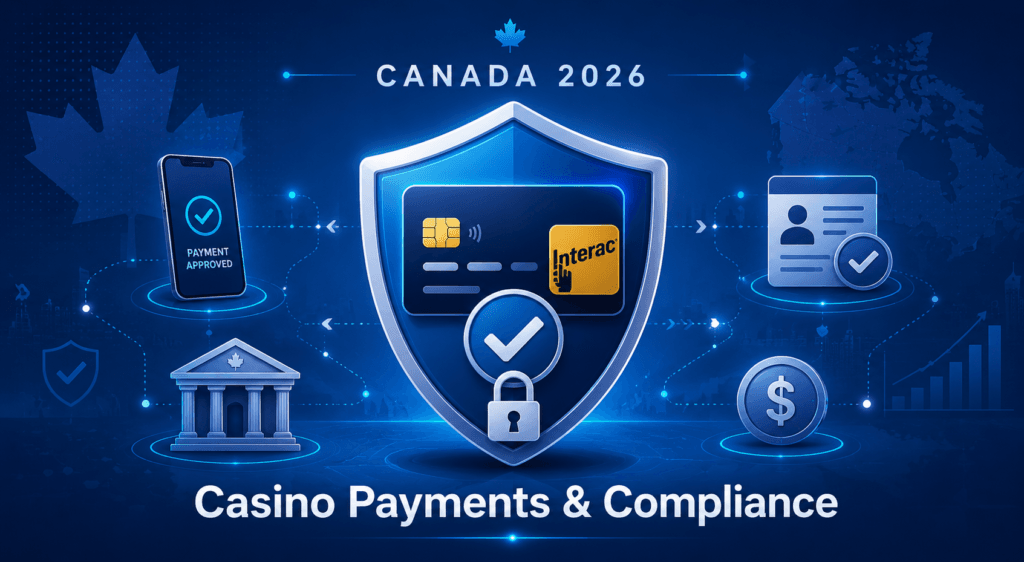
Smooth payments and banking
Payment quality is one of the strongest trust signals. Compare deposit options, withdrawal speed, fees, limits, verification steps, and whether the casino supports Canadian dollars.
🍁 Regulated province by province
Online gambling in Canada is regulated provincially. Single-game betting became legal nationwide in 2021 (Bill C-218), and Ontario opened the first competitive private market in 2022. Here is how legal play is organised where you live.
iGaming Ontario · AGCO
Open, regulated competitive market since April 2022.
PlayNow · BCLC
Government-run online casino and sportsbook.
Loto-Québec · Espacejeux
Provincial platform for casino games and betting.
Play Alberta · AGLC
Government online play; competitive market in progress.
PlayNow · partners
Provincial and partner-operated online options.
Atlantic Lottery (ALC)
Online play across the four Atlantic provinces.
Always confirm that an operator is licensed to accept players in your province, and that it supports CAD and Interac before depositing. Players must meet the legal age in their province (18 or 19+).
Helpful casino topics
Latest articles

Short expert answers from the Casinoble desk on reviews, trust checks, payments, and bonus coverage.
Lukas MollbergHead of Content We compare licence details, payout speed, payment options, bonus terms, mobile performance, game selection, support quality, responsible gambling tools, and overall value for Canadian players.
Our reviews explain both strengths and drawbacks. Commercial partnerships may exist, but recommendations are written around testing criteria and reader usefulness rather than bonus size alone.
Check licence information, accepted provinces, CAD banking, withdrawal limits, wagering requirements, identity verification rules, support availability, and responsible gambling tools before depositing.
Yes. The site includes casino bonus guides, no-deposit offers, free spins, cashback explainers, Interac casino guides, card payments, e-wallets, crypto casino banking, and withdrawal advice.
Our team
Casinoble combines casino reviewers, writers, editors, and partner-data specialists to keep guides readable, commercially transparent, and useful for Canadian search intent.
About Casinoble
Casinoble started in 2016 and has grown into a Canada-focused online gambling resource with casino reviews, bonus explainers, payment guides, sports betting coverage, educational game content, and responsible gambling reminders. Our goal is to make casino research easier while keeping risk, terms, and player protection visible.
The first version of Casinoble was shaped around clearer casino research.
Casinoble went live with casino reviews, guides, and player-first explanations.
The first editorial hire helped formalize review standards and content checks.
Coverage expanded around Canadian payment options, rules, and safer play.
Reviews were refreshed for current player habits, risks, and protection tools.

Remember to be careful when gambling online. Never bet money that you cannot afford to lose. Always set a budget for each session so you know when to walk away. Do not drink alcohol when betting online.
Online gambling can be addictive. If you have trouble quitting, or if your behaviour affects your family, seek help from the organisations below.